A backyard can be much more than an open patch of grass behind a house. With thoughtful planning, it can become a comfortable extension of the home, offering space for entertaining, relaxing, gardening, recreation, and everyday family activities. The most successful renovations usually balance appearance with practical needs, so every improvement contributes to how the property looks and how easily it can be used.
Before beginning a major project, homeowners should think about how they currently use the yard and what they would like to change. Some properties need better drainage or clearer walkways, while others would benefit from more shade, privacy, seating, or recreational space.
Budget, maintenance expectations, sun exposure, soil conditions, and long-term plans should all influence the renovation process. A family that expects to add a pool later may need to reserve space and plan access routes now. Likewise, anyone hoping to reduce yardwork may prioritize low-maintenance materials and automated features. By considering both immediate goals and future use, homeowners can make improvements that support the property for years.
Build a Strong Landscaping Foundation
Landscaping sets the tone for the rest of the yard, so it is often a useful place to begin. Healthy lawns, defined planting beds, and well-placed shrubs can make a property look more organized while also improving privacy and creating natural transitions between outdoor zones. Homeowners should choose plants based on local climate, sunlight, available space, and the amount of maintenance they are willing to perform.
Local landscapers can help evaluate existing conditions and recommend ways to improve the layout without overcomplicating the yard. They may suggest reshaping beds, correcting drainage problems, installing mulch, or selecting plants that fit the size of the property. A good landscaping plan should leave enough open space for movement while preventing trees and shrubs from crowding structures as they mature.
Local garden centers can also be valuable resources when homeowners want to choose plants themselves. Staff members can often explain which varieties are suited to the region, how much sunlight they need, and what kind of soil conditions they prefer.
Layering trees, shrubs, flowers, and ground covers can create depth without making a yard feel cluttered. Homeowners should also think about seasonal interest so the landscape has visual appeal beyond spring and summer. Evergreens, ornamental grasses, and plants with colorful fall foliage can help maintain structure throughout the year.

Create More Usable Surfaces
A functional backyard needs surfaces that can support the way the space will be used. Patios, walkways, seating areas, and retaining features can create more defined zones while reducing wear on grass and soil. These elements are especially useful in yards where frequent foot traffic leads to muddy or uneven areas.
Hardscaping contractors can help homeowners plan durable features such as patios, paths, steps, garden walls, and fire pit areas. Material choices may include concrete, brick, natural stone, or pavers, depending on the desired appearance and maintenance level. Proper installation is important because grading and drainage can affect how well hardscaped areas perform over time.
Homeowners who want a consistently green surface with limited mowing may consider artificial turf installation in selected areas. Artificial turf can work well in narrow side yards, play zones, pet areas, or spaces where natural grass struggles because of shade or heavy use.
Combining hardscaping with turf, planting beds, and open lawn can help create visual balance. Rather than covering the entire yard with one surface, homeowners can divide the property according to activity. A paved dining area, soft play zone, and landscaped border can each serve a different purpose while still feeling connected.
Add Privacy and Clear Boundaries
Privacy can make a backyard feel more comfortable, especially in neighborhoods where homes are close together. Fencing, landscaping, and strategic structures can help define the property without making it feel closed off. The best approach depends on what homeowners want to screen and how much separation they need.
Garden fencing can be used around vegetable beds, flower gardens, pet areas, or smaller sections of the yard. It can protect plants, create decorative borders, and establish clear boundaries without requiring a full-height privacy fence. Homeowners should select materials that can tolerate outdoor exposure and fit the overall style of the landscape.
For broader privacy, taller fencing or dense plantings may be more appropriate. Shrubs and ornamental trees can soften hard fence lines while adding color and texture. When using vegetation as a screen, homeowners should account for mature width and height rather than placing plants too closely together.
Boundaries should also support safe movement. Gates should align with walkways, and fences should not create blind corners near driveways, steps, or play areas. Families with children or pets may need additional gate hardware or enclosed zones to make supervision easier.
A thoughtful privacy plan can also reduce noise and define separate activities. For example, a fence or planting screen can separate a quiet seating area from a play space or pool zone. This allows different parts of the yard to function independently without feeling disconnected.

Improve Shade and Outdoor Comfort
Comfort plays a major role in how often a backyard is used. Even an attractive outdoor space may sit empty if it becomes too hot during the afternoon or lacks protection from sun and light rain. Adding shade can make seating and dining areas more inviting throughout more of the day.
Pergola installation can create a defined outdoor room while adding architectural interest. A pergola can be placed over a patio, dining area, or lounge space to provide partial shade and a sense of enclosure. Depending on the design, homeowners may add curtains, retractable covers, lighting, fans, or climbing plants.
Automated screen services can provide additional flexibility for covered patios, porches, or outdoor rooms. Motorized screens can be lowered when homeowners want more shade, privacy, or insect protection and raised when an open view is preferred. This can help families adapt the same space to changing conditions without permanently closing it in.
Furniture placement should also support comfort. Seating areas work best when there is enough space to move around tables and chairs without blocking doors or walkways. Weather-resistant cushions, outdoor storage, and nearby lighting can make the area easier to use and maintain.
Homeowners should consider how shade structures affect surrounding plants and indoor rooms. A new pergola or screen may change the amount of sunlight reaching nearby windows or landscaping, so placement should be evaluated carefully before installation.
Keep Trees Healthy and Manage Risk
Trees can be some of the most valuable features in a backyard because they provide shade, privacy, and visual structure. However, mature trees also require ongoing attention, particularly when branches extend over roofs, patios, driveways, or areas where people regularly gather.
Tree care services can help with pruning, health assessments, storm damage, and other maintenance needs. Regular trimming may remove dead or damaged limbs, improve clearance around structures, and reduce overcrowding within the canopy. Homeowners should avoid excessive or poorly timed pruning because it can weaken trees or affect their natural shape.
In some situations, local tree removal may be necessary. A tree that is dead, unstable, badly damaged, or located too close to a structure can create safety concerns that pruning cannot correct. Removal may also be considered when roots interfere with pavement, utilities, or planned construction.
Before removing a healthy tree simply to make room for another feature, homeowners should think about what will be lost. Large trees can provide shade that takes decades to replace, and their removal may change drainage, privacy, or soil conditions. If removal is needed, homeowners can consider planting another tree in a more suitable location.
Tree planning should be coordinated with other renovation work. Heavy equipment used for patios, pools, or grading can damage roots if access routes are not carefully planned.
Plan Recreational Features Carefully
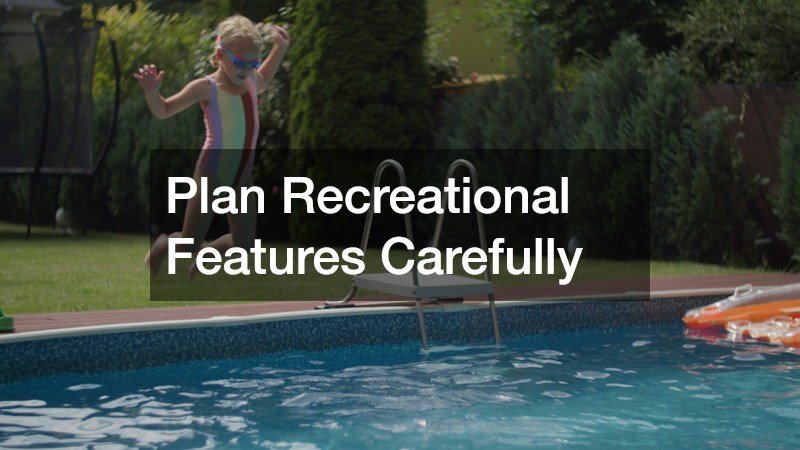
Backyards often become more enjoyable when they include spaces dedicated to recreation. Depending on the household, this could mean a play area, sports zone, fire pit, garden, or swimming pool. Large recreational features should be planned early because they can affect drainage, access, fencing, and utility placement.
Homeowners considering a pool should speak with an in ground pool contractor before finalizing the rest of the landscape. Pool size, shape, equipment placement, setbacks, grading, and access for construction equipment can all influence the design. Planning these factors early can prevent homeowners from installing patios, trees, or fences that later have to be removed.
A pool area should include enough room for safe circulation and seating. Homeowners may also need to account for fencing, lighting, storage, and slip-resistant surfaces. Local requirements can affect barrier heights, gate hardware, and other safety features, so these details should be reviewed during planning.
Families who do not want a pool can still create recreational zones that encourage outdoor use. Open turf areas can support games, while compact patios can accommodate table tennis, outdoor exercise, or children’s activities. The goal is to match the space to the household rather than adding features simply because they are popular.
Flexible designs often have the greatest long-term value. A play space for young children can later become a lawn, garden, or seating area as household needs change.
Use Lighting and Technology Strategically
Lighting can extend the hours when a backyard is usable and make walkways, steps, and gathering areas easier to navigate after dark. A layered approach usually works better than relying on one bright fixture. Path lights, wall-mounted fixtures, step lights, and subtle landscape lighting can each serve different purposes.
Homeowners should first focus on areas where visibility matters most. Stairs, gates, cooking areas, and transitions between surfaces should be easy to see. Decorative lighting can then be added around trees, planting beds, or architectural features to create atmosphere without producing unnecessary glare.
Technology can also make outdoor spaces easier to manage. Smart lighting controls, irrigation timers, motorized shades, and outdoor speakers can reduce the amount of manual setup needed before using the yard. Homeowners should choose products designed for exterior conditions and make sure electrical components are installed appropriately.
Automation is most useful when it solves a recurring inconvenience. A sprinkler schedule can simplify plant care, while motorized screens can make a patio more comfortable during changing weather. Adding technology without a clear purpose may create more maintenance rather than less.
Outdoor electrical planning should happen before hardscaping is complete whenever possible. Running conduits, wiring, or low-voltage lines after patios and paths are installed can require unnecessary disruption. Coordinating these systems early can make future upgrades easier as well.

Coordinate Projects for a Cohesive Result
Backyard renovations are easier to manage when individual projects are planned as parts of one larger design. A new patio may influence where a pergola should go, while a future pool can determine where trees, fencing, and utility lines should be located. Thinking through these relationships can reduce expensive changes later.
Homeowners should begin by identifying priorities and dividing projects into phases. Safety and drainage issues usually deserve attention before decorative upgrades. Major construction should also happen before delicate landscaping whenever possible so equipment and foot traffic do not damage newly planted areas.
Creating a basic site plan can help organize decisions. It should show existing structures, trees, property boundaries, utilities, walkways, and major planned improvements. Even a simple scaled drawing can make it easier to understand spacing and identify conflicts before work starts.
Budgets should include preparation, installation, disposal, maintenance, and potential repairs. Homeowners may also want to reserve part of the budget for unexpected conditions, especially when grading, excavation, or older structures are involved. Comparing priorities can help determine which projects will have the greatest impact on daily use.
The most successful backyard renovation is not necessarily the one with the most features. A well-planned property should be comfortable, practical, and manageable for the people who live there. By coordinating landscaping, surfaces, privacy, shade, trees, recreation, lighting, and technology, homeowners can create an outdoor environment that feels intentional and supports a wide range of activities. Careful planning also makes it easier to add future improvements without undoing previous work, helping the backyard continue to evolve alongside the household.